

August 1, 2026
Formulation considerations in modern multi-purpose solutions
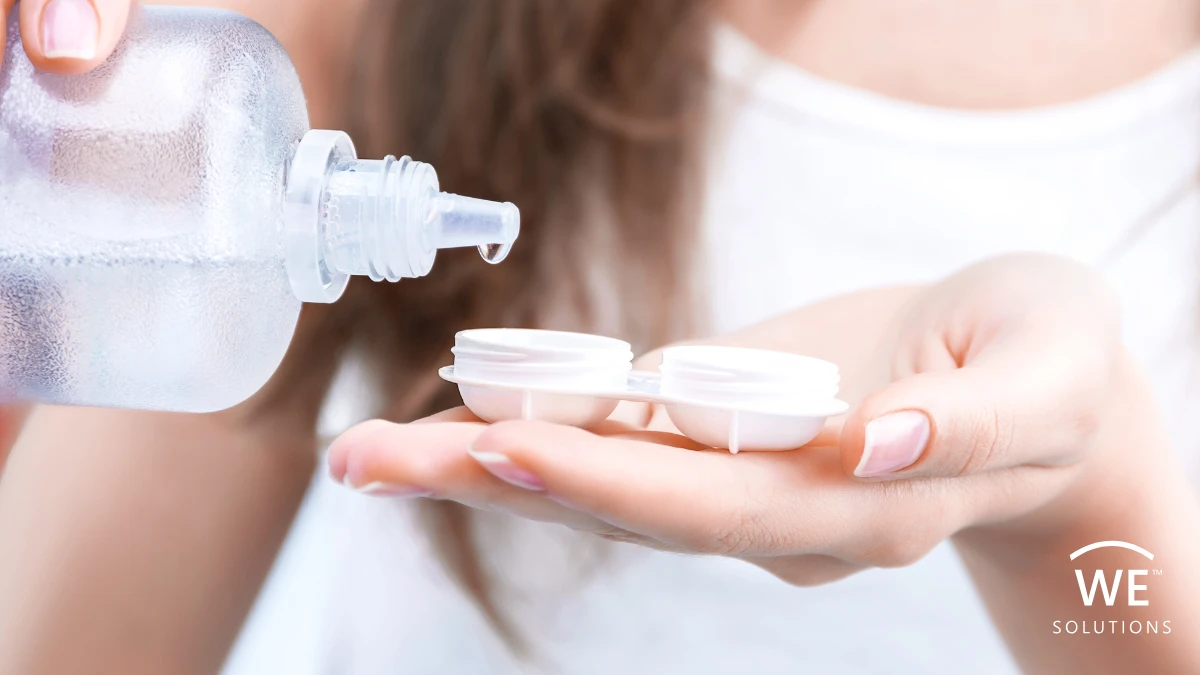
The development of a modern multi-purpose solution (MPS) requires a careful balance between antimicrobial efficacy, material compatibility, and ocular surface tolerance. As contact lens materials continue to evolve, particularly in the areas of specialty lenses such as GP and scleral designs, formulation strategy becomes increasingly relevant.
Understanding the underlying considerations behind a contact lens solution helps practitioners evaluate products not only from a functional perspective, but also from a clinical and patient-compliance standpoint.
Antimicrobial efficacy and regulatory balance
Formulations must meet established microbiological standards while remaining suitable for daily, repeated exposure to the ocular environment. The regulatory framework for contact lens solutions requires that antimicrobial performance is demonstrated without compromising safety. This necessitates a well-balanced preservative system and carefully selected excipients that support stability and performance.
From a practitioner’s perspective, the reliability of a contact lens solution begins with confidence in its antimicrobial profile and validated testing.
Ocular surface compatibility and tolerance
Equally important is biocompatibility. Contact lenses interact continuously with the tear film and ocular surface. An MPS also becomes part of that system.
According to FDA Guidance formulation considerations typically include:
- buffering systems to maintain physiological pH
- isotonicity to align with tear osmolarity
- surfactant systems for deposit removal
- conditioning agents that interact properly with lens materials
Daily exposure requires attention to cumulative tolerance. Solutions intended for regular use must support ocular surface compatibility across diverse patient populations, including long-term lens wearers and specialty lens users.
Material compatibility across lens types
Modern clinical practice frequently involves a variety of lens materials: Hydroxyethyl Methacrylate, Silicone Hydrogel, Fluoro-Silicone Acrylate, Silicone Acrylate and Gas Permeables. A contemporary MPS should demonstrate compatibility across all materials when used according to instruction. This becomes particularly relevant in specialty practices where patients may transition between lens types or require customized lens modalities due to irregular corneas, ocular surface disease, or other advanced refractive needs. Simplifying care regimens while maintaining material compatibility can positively influence patient adherence and routine consistency.
Formulation philosophy and patient compliance
Beyond laboratory performance, formulation design must consider real-world behavior. Simplified regimens supported by reliable all-in-one contact lens solutions may enhance compliance, particularly in younger patients or those managing complex visual conditions.
When practitioners evaluate a MPS, key considerations often include:
- Antimicrobial performance
- compatibility with lens materials
- patient-reported tolerance
- simplicity of regimen
Products that integrate these elements into a coherent formulation strategy support both clinical decision-making and patient routine.
WE CARE – A formulation approach focused on routine reliability
WE CARE Multi-Purpose Solution was developed with these formulation principles in mind. Designed to clean, rinse, disinfect, and store contact lenses, it supports daily lens care routines across soft, GP, and scleral lens types when used as directed.
The development philosophy prioritizes compatibility, consistency, and structured daily use, aligning clinical requirements with practical patient needs.
As always, product selection should align with individual patient profiles and clinical judgment.
Wind-up
Modern multi-purpose solutions are the result of deliberate formulation strategy, regulatory alignment, and material science considerations. For practitioners, understanding these elements supports informed product selection and patient education.
As contact lens modalities continue to diversify, formulation transparency and compatibility remain central to effective long-term lens care.
Additional Sources:
Osmolality and pH of commercially available contact lens care solutions and eye drops (2021): https://pubmed.ncbi.nlm.nih.gov/33187860/
Consequences of Preservative Uptake and Release by Contact Lenses (2018): https://pubmed.ncbi.nlm.nih.gov/29369228/
About Cleaning, Disinfecting, and Storing Contact Lenses (2025): https://www.cdc.gov/contact-lenses/about/about-cleaning-disinfecting-and-storing-contact-lenses.html
Preventing Eye Infections When Wearing Contacts (2025): https://www.cdc.gov/contact-lenses/prevention/index.html
This guide does not replace professional advice from your eye care professional.
Always read the label and instructions for use.